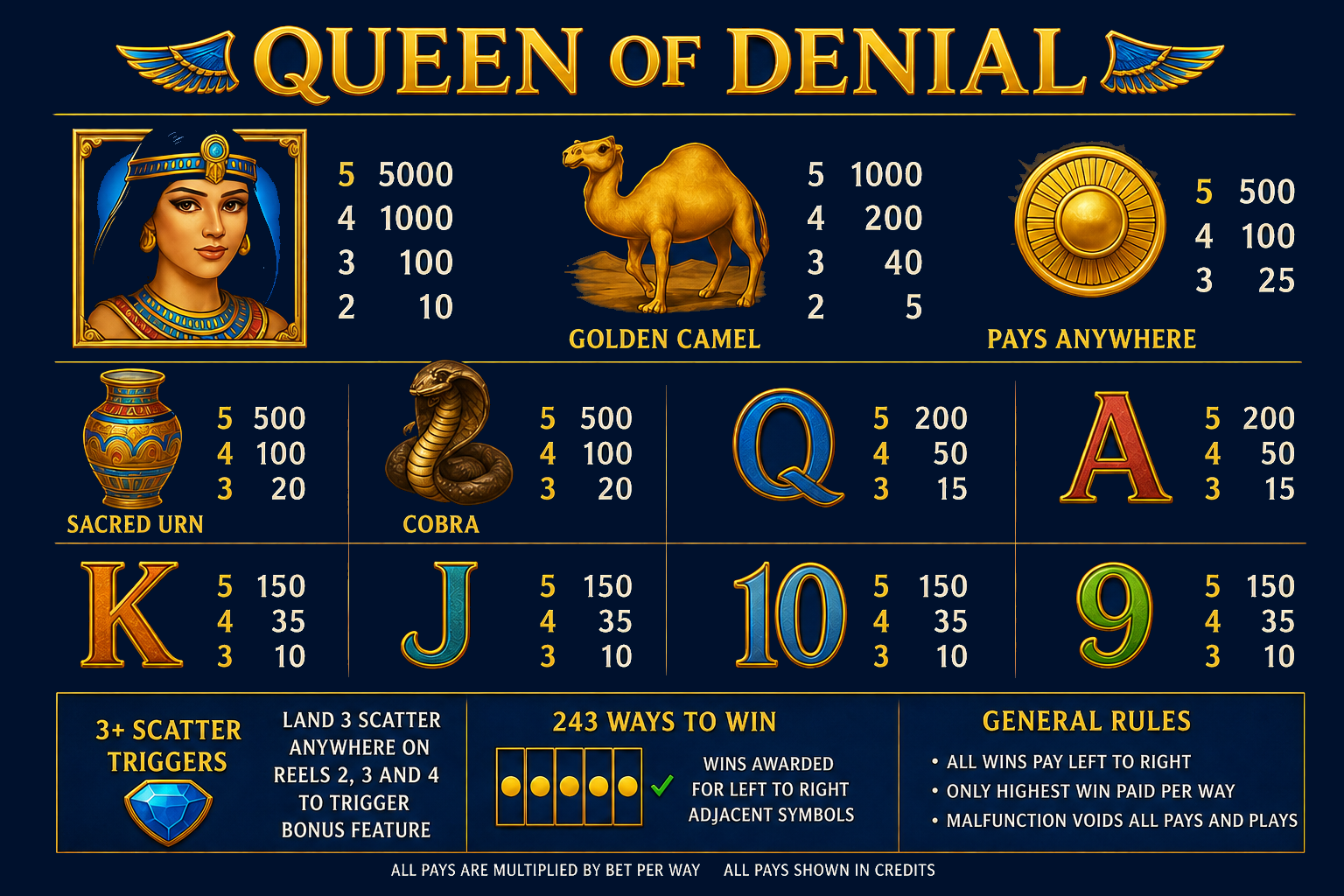
A lifetime pokies simulator that turns “just a little play” into estimated weekly, yearly and lifetime cost. This is a mathematical simulation, not a real gambling product.
Play a lifetime of pokies in one press!
Why you don't win even when you have a win...
The Math
Why even when you win at the pokies, you lose!
The Law Of Large Numbers & Regression To The Mean
A pokie machine let's you win sometimes, but is still designed to take money over time. No matter what.
Play for long enough and you are ensured of never recouping your losses.
Think of it like this: a machine is set to pay out about 90% over the long run, that means for every $100 put through the machine, the return is $90 You might win in one session. You might even win big a few times. But the more you play, the more your results tend to move back toward the machine's long-term average. Say you win $90 out of a hundred, that's not a win, so you keep playing, and by extending play, that actually decreases your overall margin over the long term.
While this may sound like madness, the less spins you make over a lifetime, the more chance of recouping your losses. Just say you've only ever played the pokies a few times and you win big, you've come out ahead, you've beat the game, that's about the only instance where you'd likely come out on top over a life time, to stop playing there and then. But you got lucky, luck is with you, now you wan't to do it again, bad idea, because the more you play the more you regress to the mean.
Pokies are designed with a mathematical edge, so over time the every player loses money. A machine with a 90% return-to-player rate does not mean you lose 90% every press, it means over the long run it returns about $90 for every $100 put through it, meaning the expected loss is about $10 per $100 cycled through the machine. The more you play, the more that edge works against you, and that is compounded if you only take out big wins. Put in a hundred and lose $10, that's not enough.
Put in a hundred and win $50, that's not enough. You keep playing and don't double your money, you lose it all because you keep pressing. You put more back in to recoup your losses, so you put another $50 through, you win $50 in one press, but you want to make sure you come out on top, you get greedy and go double or nothing. If it's a true 50/50 gamble, that pays out 50% of the time. You win, but you get cocky, you go double or nothing again, another 50/50 gamble.
You've turned a lucky $50 into a 25% chance of making $200. Did you win? You will sometimes, but over time you lose and lose more, because any number under 100% means you lose out over time the more you regress to the mean through more presses and more risks taken to win big.
Simple version: pokies do not need to beat you every spin. They only need the maths to beat you over enough spins.
The dice graph below shows the same idea using two six-sided dice. One roll can be wild and unpredictable. But as the number of rolls gets bigger, the results settle into a stable pattern. Pokies work differently from dice, but the lesson is the same: over large numbers, randomness starts to obey the maths.
Two Dice Roll Simulator
Roll two dice and watch where the totals land. At small numbers the graph is messy. At big numbers it becomes predictable.
Total rolls: 0
The total of 7 appears most often because there are more ways to roll it. There is only one way to roll a 2, but six ways to roll a 7. Over enough rolls, the graph stops looking random and starts looking like the true odds.
Pokies Mind Traps
How the pokies trick your brain
These are common thinking mistakes that make pokies feel more winnable than they are. The worst traps are first.
BiasHighest risk1 / 12
Gambler's Fallacy
Thinking a win is “due” because you have lost a few times.
In simple terms
The machine does not remember what just happened. A losing run does not make the next spin more likely to win.
How it traps pokies players
You keep feeding money in because it feels like the machine owes you a win. It does not.
Safer thought
Every spin is separate. The machine is built to take more money than it gives back over time.
The pokies industry’s huge yearly losses are not mostly “everyone having a harmless flutter.” National work that scales up Tasmania’s deep survey shows the cash is overwhelmingly drained from people already past safe spending limits—that is, harmful and problem-level gambling, not low-risk play. The figures below are from Australian reports; they show how big the damage is, not what will happen to you personally.
~$13B
Each year Australians lose about $13 billion on pokies in pubs and clubs (Western Australia counted differently). Messy reporting in some states means the real total could be nearer $16 billion. That is life savings, rent, and family money fed into machines.
~$10B
About $10 billion of those losses—roughly 84%—come from people with a gambling problem and others in the harm zone: anyone playing past the “low-risk” spend lines from the Tasmania study when those lines are applied country-wide. Low-risk players are not carrying the industry. People in trouble are.
~1 in 3
About one in three Australian adults plays the pokies at least once a year. Many touches are small—but the dollars that stack up to billions do not come from those small touches. They come from people who cannot stop at “just a bit.”
$240 / yr
The Tasmania study drew a yearly line for “still low risk” on pokies alone—about $240 per person per year (about $510 if you count every kind of gambling). Go past that and you are about five times more likely to be harmed: debt, lies, shame, relationships breaking. The industry’s profit sits on the wrong side of that line.
~$2B vs $13B
If everyone who played stayed under those safe caps (updated to today’s dollars), yearly pokies losses would land near $2 billion, not $13 billion. The gap is not “a bit of fun.” It is people playing at levels that predict harm—and paying for it.
85–90%
By law, machines pay back about 85–90 cents of every dollar over the very long run. That does not protect you. You can still lose your shirt in one night or one bad year—especially if you are already chasing losses.
Not every state has measured gamblers the way Tasmania did. National totals mix official loss counts with modelling. Read this as proof the business model leans on people in the harm zone, not as a forecast of your own results.
Read more at The Australia Institute. Their work uses Tasmania’s gambling study (ACIL Allen) and national loss data.
The Big Thing To Remember
Pokies are built around randomness.
There is no secret trick, lucky machine, or winning system that guarantees success long-term.
The lights, sounds, near misses, and random wins can make it feel like winning is just around the corner, but over time, pokies are designed to take more money than they give back.
Financial Harm
People can lose savings, paychecks, rent money, and bill money. Some people end up in serious debt trying to win back losses.
Emotional Harm
Pokies can lead to stress, guilt, shame, anxiety, depression, and feeling trapped after losing money.
Relationship Harm
Gambling problems can damage marriages, friendships, and family trust. People may hide losses or pull away from others.
Time Loss
Many people do not realise how many hours disappear into pokies over months and years.
Physical Health Harm
Long gambling sessions can affect sleep, stress levels, eating habits, and physical health.
Addiction & Loss Of Control
What starts as entertainment can slowly become a habit that feels difficult to stop.
Isolation
Some people slowly withdraw from friends, hobbies, goals, and responsibilities as gambling takes up more of their life.
False Hope
Pokies can create the feeling that the next spin could change everything, that one big win will fix the losses, or that quitting now would waste the money already spent.
If you or someone you know is in crisis, call Lifeline 13 11 14.
Reducing The Risk
If gambling is becoming stressful, difficult to control, or is causing problems in life, there are things that can help.
Set Limits Before You Start
Decide how much time and money you are willing to lose before playing. Once the limit is reached, stop.
Avoid Triggers
Some people gamble more when they are stressed, lonely, bored, angry, or drinking alcohol. Learning your triggers can help you avoid getting pulled in.
Replace The Habit
Exercise, hobbies, creative projects, gaming, socialising, learning new skills, or spending time outdoors can help fill the space gambling once occupied.
Talk To Someone
Speaking honestly with a friend, family member, counsellor, or support worker can make a huge difference.
Take Breaks & Check Reality
Step away regularly. Check how much money and time has actually been spent instead of relying on feelings or memory.
Seek Professional Help
Gambling addiction is a real problem for some people, and support services exist to help without judgement.